
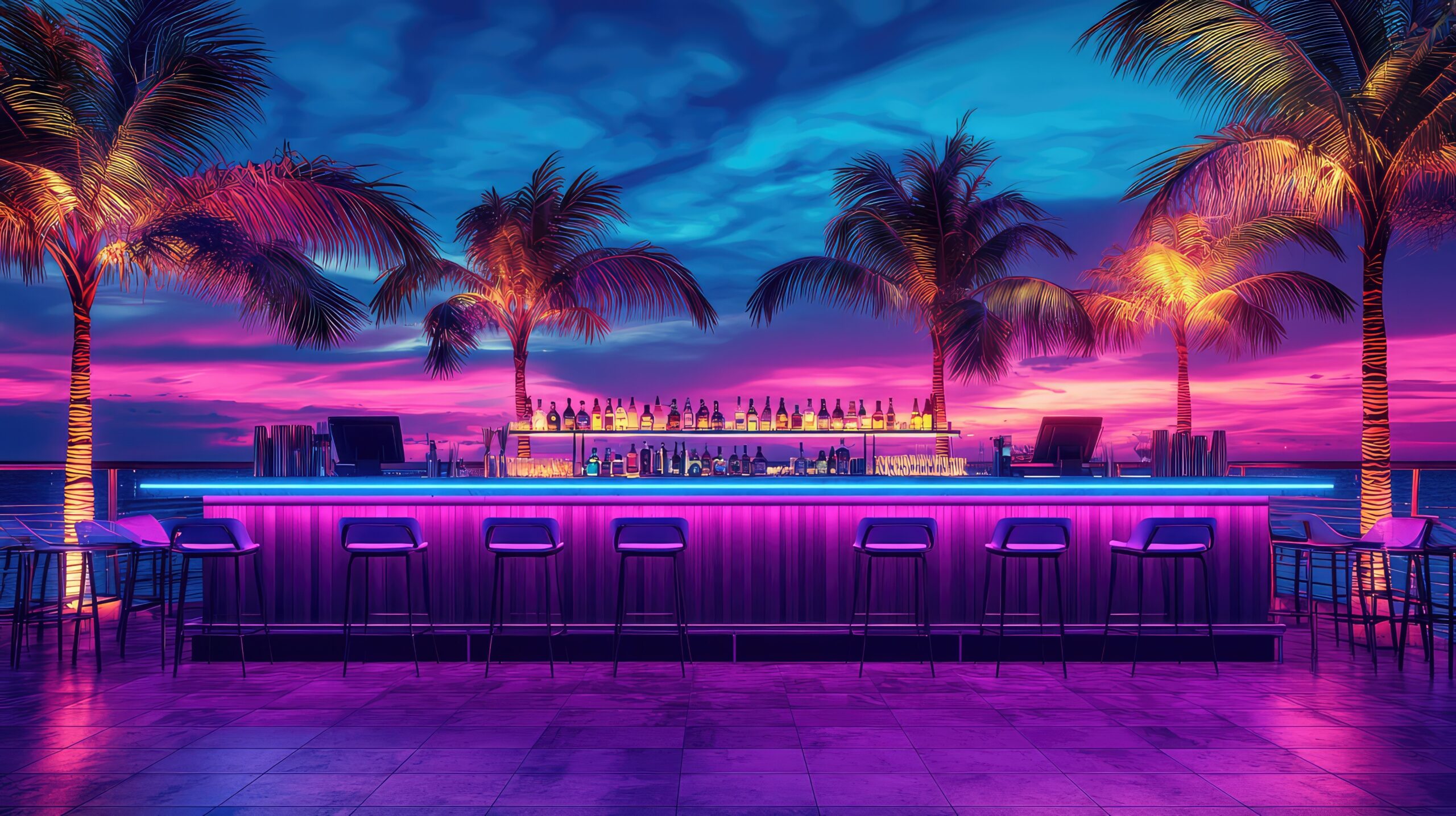
A sandy beach bar doesn’t just feel like telepathy; it’s a slow-motion con job your senses are absolutely in on. The place lines up all the cheap, legal brain hacks—blue water, endless horizon, bare feet, the soft concussion of waves, maybe a drink sweating in your hand—and lets them do the heavy lifting long before the rum shows up. By the time the glass hits the table, half your emotional work is already done; all you have to do is surrender to it.
Water is medicine disguised as scenery. Look at a wide sheet of blue with a clean horizon line and your heart rate drops, blood pressure eases off, and the nervous system quietly shifts into that lazy, parasympathetic gear built for digesting meals and bad decisions. The brain reads all that space and motion as safety: nothing is sneaking up on you, nothing is closing in. “Blue space,” the researchers call it, as if “standing on the edge of the world feeling strangely okay again” needed a lab term.
Then there’s the sand—annoying in your shoes, perfect under your feet. Every step is texture, temperature, tiny shifts in balance; it keeps you just present enough to cancel out some of the static in your head. Walking the beach is movement without ambition, exercise with no data to track, which is exactly why it works. You’re not “working out,” you’re just drifting along the shoreline while your brain quietly reboots in the background.
The soundtrack is waves on repeat, nature’s own white noise machine, smoothing the edges off your thoughts until you’re hovering somewhere between awake and meditative. Salt air in your lungs, that faint electric snap of negative ions, and a world painted in shades of blue and white—this is the kind of design brief no wellness brand can improve on. You feel calmer, looser, maybe even a little more creative, and it has nothing to do with a slogan on a bottle.

Now drop a bar into this environment and everything intensifies. A couple of drinks dial up what the setting already started: the shoulders come down, stories get longer, secrets get louder. Alcohol gives you just enough courage to say the thing you’ve been editing in your head since January, and the beach gives you a stage where time feels suspended, rules suspended, the rest of your life conveniently far away. It’s a sanctioned limbo: you, the drink, the sea, and all the “what if” versions of your life lining up on the horizon.
Culture does the rest. “Beach” is global shorthand for escape, for the fantasy that you can step out of your regular skin for a night and try on a more interesting version of yourself. In a sandy bar, the costume is simple—sunburn, salt, a plastic cup—and suddenly strangers start talking like old friends under the kind of light that forgives almost anything.
Some beach bars are more than plywood, ice, and rum; they’re living, swaying archives. The walls hold storms, shipwrecks, bad ideas, and better songs.
Foxy’s Tamarind Bar – Jost Van Dyke, BVI
Picture a ramshackle altar under a tamarind tree, founded in 1968 by Philicianno “Foxy” Callwood—a man who turned his own personality into house doctrine. Sailors have been limping in here for decades to be serenaded, heckled, and folded into Foxy’s never‑ending oral history of the island, each new arrival just another verse in a song that probably started before you were born.
Soggy Dollar Bar – White Bay, Jost Van Dyke, BVI
Here, you earn your drink. You swim ashore, pockets drowned, and slap wet cash on the bar for a Painkiller—the dark-rum, coconut, pineapple, orange, nutmeg original that went on to haunt cocktail menus across the Caribbean. The story is in the ritual: sun-stunned yacht crews, storms ridden out at anchor, people arriving salt-crusted and leaving half-asleep in hammocks, wondering if real life will feel this good again.
Elvis’ Beach Bar – Sandy Ground, Anguilla
A simple shack on the sand with a front-row seat to the apocalypse and the aftermath. The owner rode out Hurricane Irma on higher ground while the storm took its teeth to the island, then came back and rebuilt and kept pouring. The regulars returned like migrating birds. That’s your narrative arc right there: rum, ruin, and the stubborn, joyful business of putting a bar—and a community—back together.
La Cabane – Barbados
On the surface, it’s modern: clean lines, good ice, the kind of cocktails that photograph well. Underneath, you’re standing in the shadow of Mount Gay, the oldest continuously operating rum brand on Earth, on an island built on sugar, ships, and all the brutal history that came with both. La Cabane is where global cocktail culture clinks glasses with centuries of plantation and seafaring ghosts, and the drink in your hand is part of that argument.
Leon’s – Grenada
Leon’s is not here to impress your follower count. It’s rum in plastic under yellow parasols on a quiet Grenadian beach, with locals moving at island speed and music that sounds like someone’s actual life, not a playlist. You come here for small, human stories: the bartender’s cousin who fishes at dawn, the couple who never left, the guy who knows every storm by year and name. No influencer gloss, just sun, sand, and the feeling that you wandered into someone else’s good afternoon.
Dune Preserve – Anguilla
On Anguilla, Dune Preserve is what happens when a reggae singer builds a driftwood cathedral to rum and stubborn joy. Bankie Banx turned this pile of boards, boats, and sand into a kind of open‑air parish where the liturgy is live music, long afternoons, and the feeling that whatever you escaped from can’t swim this far.
In the end, a beach bar that “reads your mind” isn’t mystical. It’s a well‑wired trap: sensory science humming in the background, alcohol loosening the tongue, and a backdrop loaded with cultural meaning and old stories. You walk in looking for a drink and a view. You leave carrying a confession, a rumor, a half-true tale about the night you almost didn’t go home.