
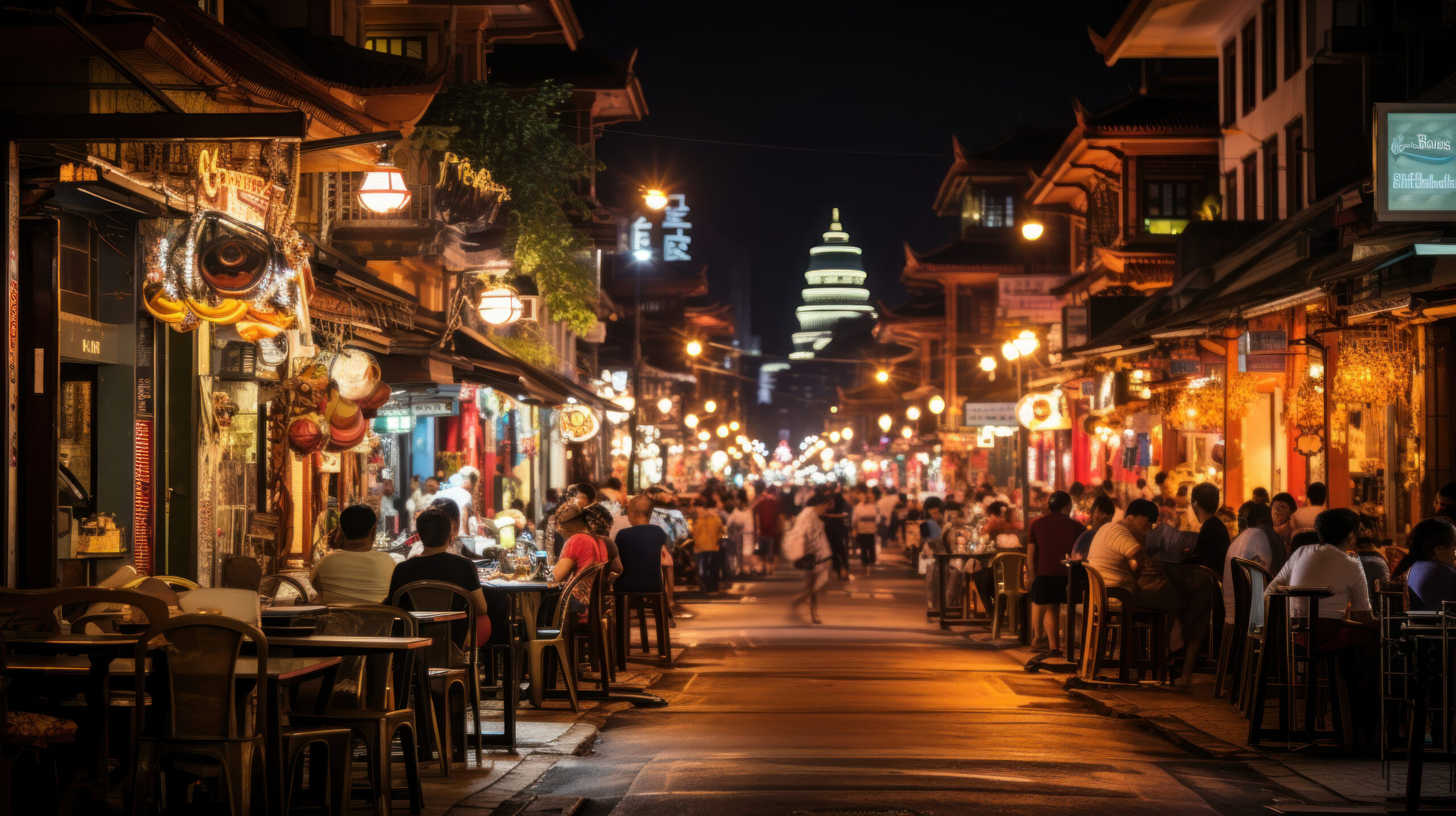
The Old City of Chiang Mai wakes early, in the violet haze before the sun burns off the night. Somewhere, a monk’s chant drifts over the moat, half-heard between the hum of scooters and the smell of fish sauce and incense. You are a digital nomad—one of thousands lured by cheap rent and Wi‑Fi—and you step out into the humid morning air, laptop tucked like a holy relic in your bag. The coffee shop down the soi opens at seven. You’ll be there by seven‑oh‑five. The café is cool and quiet, a safe house of air‑conditioning and espresso. On any given day you’ll find the same crowd: tattooed wanderers on three‑month visas, coaches of “conscious living,” crypto pilgrims mining for enlightenment between Telegram chats. MacBooks glow like votive candles. Someone’s on a video call about brand strategy. Someone else is writing an e‑book about finding freedom through minimalism. You sip a flat white, half‑ashamed and half‑content—aware that this life, as absurd as it is, still beats cubicles and traffic jams.
Every morning the same cast reassembles, like regulars at a neighborhood bar—only the bar serves oat milk lattes and existential freedom. In the Old City, you learn people by their screens. There’s Max from Berlin, who codes decentralized finance platforms between Muay Thai sessions. Yuki, a Tokyo designer who only wears linen and talks about “energy flow.” And Claire, the one who’s been here since before anyone called themselves a digital nomad, writing quietly by the window as if guarding some secret.
They orbit the same few cafes and co‑working spaces—each a waystation for rootless ambition. By mid‑morning the Wi‑Fi hum becomes communal prayer. Someone groans at a frozen upload, someone else swears softly into their AirPods. A silent fraternity of freelancers bound by bandwidth and caffeine. These are the people who chose uncertainty over routine, trading HR meetings for visa runs and spreadsheets for sunsets. Most won’t admit how lonely it can get. On good days, the community feels real. Someone organizes a motorbike trip to Pai. Someone else hosts a hot‑pot dinner in their apartment, where laughter spills into the courtyard like music. They bond over bad internet, shared hangovers, and the unspoken understanding that everyone here is either running from something—or toward it. The nights can feel weightless, like you’ve hacked life’s system.
There’s an honesty to it, though. Nobody pretends Chiang Mai is paradise. The haze rolls in from the north and the tourists come in waves. Still, when the sun drops and the air smells of grilled chicken and lemongrass, the group gathers at the corner bar by the old gate. They trade stories like currency: the startup collapse, the burned‑out corporate years, the slow escape from comfort. The beer is cheap, and under the paper lanterns, it almost feels like home. You start to realize that this perpetual motion—the Wi‑Fi, the travel, the drift—isn’t about escape anymore. It’s about connection. The small, fragmentary tribe that forms when you’re far from everything familiar. Each friend becomes a waypoint; each story becomes proof that you still exist beyond the grid.
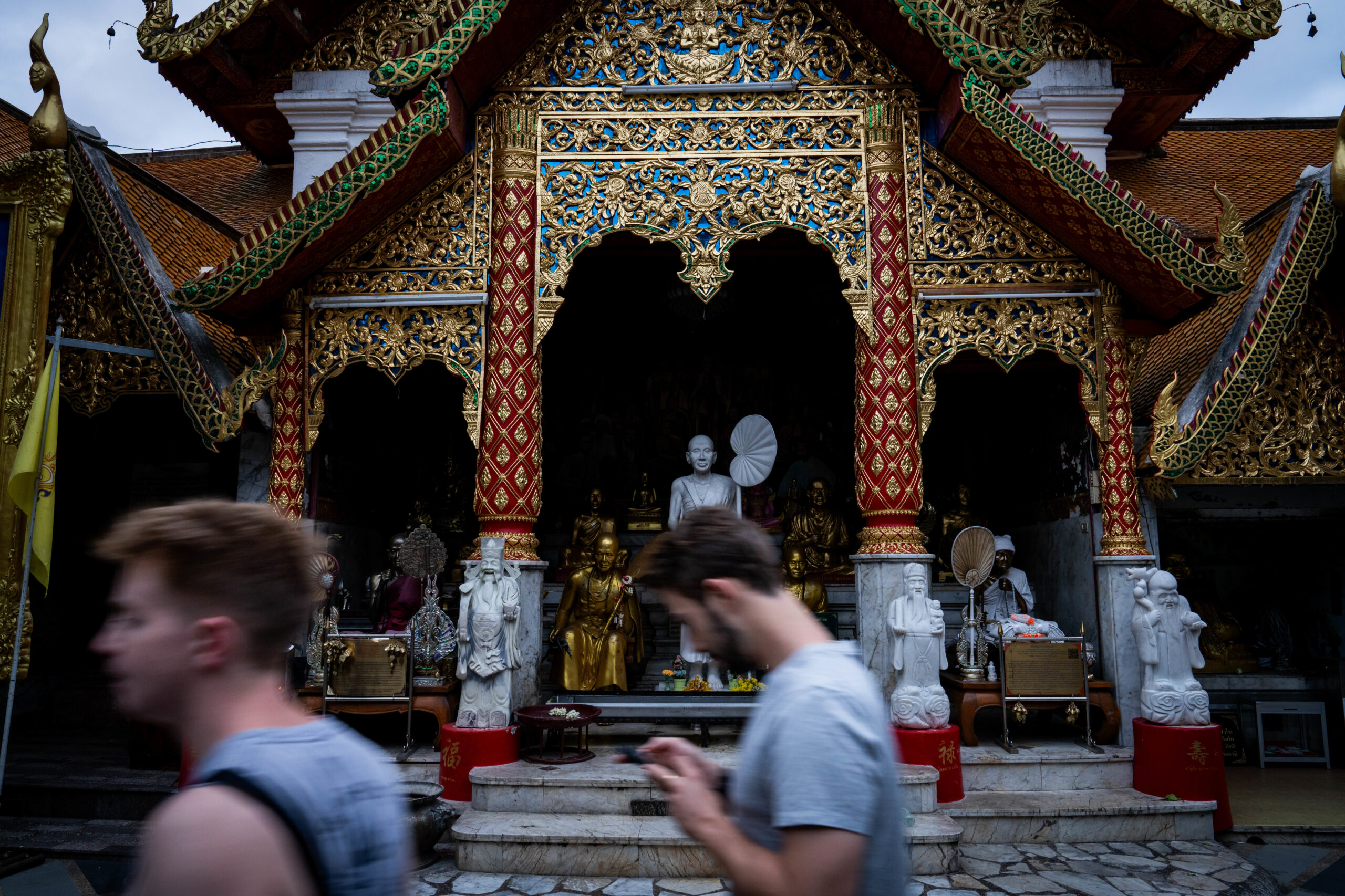
In Chiang Mai, the Old City isn’t just crumbling walls and coffee shops. It’s a map of friendships written in temporary ink, fading a little with every new arrival and departure. Tomorrow, someone will move on—to Bali, to Lisbon, to Mexico City. Someone new will take their seat by the window. The story keeps rewriting itself. And still, every morning, the same slow ritual: coffee, laptops, the shared murmur of people trying to belong everywhere and nowhere at once.
Around midday, you trade screens for streets. The Old City—crumbling and alive—wraps around you like a living museum. Golden temples gleam beside soot‑stained noodle stalls. Two centuries of civilization tangled together by tangled power lines. You dodge tuk‑tuks and tourists hunting the perfect mango sticky rice. A monk nods. A stray dog sleeps in a patch of shadow. Everything feels suspended, as if time took a smoke break and never came back Lunch happens under a tin roof. Khao soi, northern curry noodles, rich and violent with chili oil. It’s messy, perfect, the broth clinging to your fingers as the fan above struggles to move the air. The woman behind the counter has been cooking here longer than you’ve been alive. She doesn’t care about productivity hacks or personal brands. She ladles another bowl, laughs, and says something you don’t fully understand—but the meaning is clear enough: slow down. By evening, the city softens again. Lanterns flicker over the moat. Street stalls bloom along Ratchadamnoen like night flowers. You sit on a plastic stool, Chang beer sweating in hand, as the air fills with the smell of frying garlic, exhaust, and sweet pork. Nearby, another foreigner gestures wildly about blockchain. A Thai punk band strikes up by the wall.
Later, you wander home past the temples, their golden spires shimmering under fluorescent light. You’re far from home and strangely at peace with it. Tomorrow, you’ll do it all again.
Neighborhood advantages
Chiang Mai’s Old City appeals to digital nomads because it combines low living costs, strong infrastructure, and an unusually tight, welcoming community in a city that feels both laid‑back and culturally rich. It hits that sweet spot where work is easy, life is comfortable, and everyday surroundings feel interesting enough to justify the escape.Nomads tend to gravitate to a cluster of cafés, coworking spaces, markets, and bars that make work and hanging out feel almost frictionless. These spots become the “third places” where the day plays out: work, coffee, food, then a nightcap somewhere with live music or cheap beer.
Coworking spaces in Chiang Mai with the strongest communities tend to combine good infrastructure with frequent events and a welcoming, international crowd. A few names come up again and again among nomads.
Standout community hubs
Streets and micro-neighborhoods
Night markets and food zones
Bars and late-night hangouts