
To understand tapas is to understand Spain, and Spain is not a simple country. It’s the place that gave us the Spanish Inquisition, Generalissimo Franco and Pablo Picasso (let’s not forget Penelope Cruz), baroque cathedrals and bullet holes in the same plaza, a place where Christianity and Islam once uneasily shared the same patch of scorched earth and left their fingerprints on the food. It’s a country that somehow manages to be devoutly Catholic and cheerfully anarchic at the same time, lighting candles to the Virgin in the morning and throwing back vermouth and cigarettes by late afternoon.
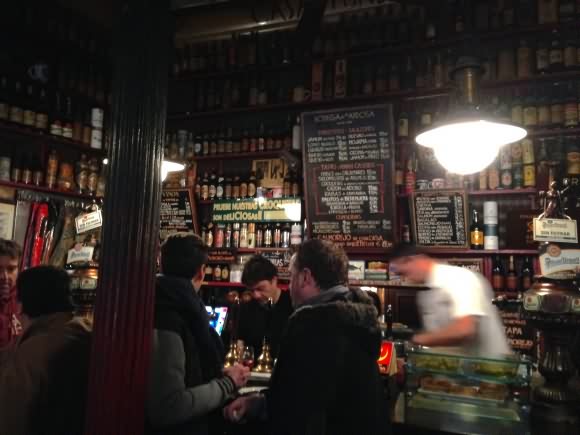
Tapas reside right in the middle of that contradiction. On one end, you’ve got the old-school bar: fluorescent lights, ham hocks dangling like sacred relics, a guy in a stained jacket slamming down plates of callos and boquerones the same way his father did. On the other, there’s the lab—modernist temples turning olives into liquid spheres, serving “air of Manchego” and deconstructed tortillas to people in expensive shoes. Same ingredients, same DNA, but filtered through Catholic guilt, civil war trauma, punk rock, and a very healthy disrespect for authority.
This is a country where surrealism isn’t just a museum exhibit; it’s daily life. The idea that your “dinner” might be six or seven stops, each one a couple of bites and a drink, makes no sense on paper. No host, no seating chart, no grand plan. Yet it all works. You walk, you drink, you eat. A bit of octopus here, a wedge of tortilla there, a plate of pork cheeks that tastes like someone’s abuela and a mad scientist got together and decided to make comfort food. Tradition and innovation, forced to share the same napkin-strewn floor.
To tapear is to move. Bar to bar, corner to corner, down narrow streets that smell like garlic and cigarette smoke, red wine sloshing just shy of your wrist. You talk too loud, laugh too long, lean into the press of the crowd because here, now, this is what life is supposed to look like. A beautiful city, a table—or maybe just a sticky bit of counter—good bread, decent booze, something sizzling in a pan, and the sense that any reasonable sentient person would be out of their mind not to fall in love with this place.

So, to understand tapas is to understand that Spain is not just about pretty plazas and pitchers of sangría. It’s about a country that took centuries of conquest, repression, religion, art, and chaos and boiled it all down to a plate the size of your hand and a glass that’s never quite full enough. You stand at a bar, shoulder to shoulder with strangers, and for a few bites at a time, all that history, all that madness, makes perfect, salty, glorious sense.
The best tapas make it dangerously easy to sit in the sun or under noisy fluorescent lights, drink cold beer or rough red wine, and let the afternoon or night slip away one plate at a time. once you belly up and order a glass of rioja or a canva of beer, most places simply deliver you a tapa, a small plate of delectables to go with it. As long as you drink, the tapas keep coming.
But you can order off the menu or chalkboard if you choose. What do I recommend? First, a beverage is called for. I never turn down a good rioja, La Rioja Alta – a traditional producer; wines like Viña Ardanza and Gran Reserva. Marqués de Riscal – One of the oldest and biggest houses; widely distributed, so you’ll often see their crianza and reserva in casual bars. For beers, I like Mahou Cinco Estrellas, the classic pale lager you’ll see everywhere in Madrid. Also good is Estrella Galicia.
Dishes? Mostly naughty things: guts, tripe, snails, fatty sausages, fried fish, things that drip, crunch, or fight back a little, because that’s where the fun lives — a parade of small, salty miracles, each one an argument for never going home.
The best tapas are brutally simple and traditional, the kind of things a bar has been turning out for decades without changing the recipe or the surly guy behind the counter.
Standbys include:
A night of tapas with friends new and old can feel like a conspiracy of pleasure. It’s you and your little crew moving from bar to bar, passing plates, refilling glasses, and quietly agreeing that whatever responsibilities you had today have been permanently reassigned to “mañana.” The food is cheap, the wine is decent, everyone’s talking over everyone else, and somehow it all adds up to something that feels slightly illicit—like you’ve stumbled into a secret society whose only initiation ritual is one more round and one more bite.