
Frank Sinatra was buried with a bottle of Jack Daniel’s in his pocket – along with a pack of Camels, a Zippo lighter and a roll of dimes, a final nod to his lifelong love affair with American bourbon. Other bold-faced whiskey enthusiasts today include Steph Curry, Bob Dylan and Matthew McConaughey. It’s time you and your posse took a weekend homage to the mothership.
The story of bourbon is the story of America’s heartland. A Dollywood of the mind where hillbilly culture, holy hustlers, and doomed geniuses give the turf its authentic voice. And deep in bourbon country is a land of gutter-and-god extremes, where sublime art crawls out of cheap bars, smoky honkytonks, Pentecostal tents, and backroom rackets, all fused into one long, depraved love song. What better way to honor America’s funkadelic character than a weekend tour of the Bourbon Trail.
Kentucky’s Bourbon Country is what happens when America slows down long enough to remember how to do one thing well. The air out here smells like warm corn mush and cut grass, diesel from passing pickups, and the sweet rot of rickhouses leaking angel’s share into the hills. The towns are small enough that everybody knows where you’re staying and what you’re drinking before you finish your first pour, and nobody is particularly impressed that you’ve shown up to Instagram their daily bread.
Tour companies are the quiet enablers of this roadshow, and going with them is better than ending up in a ditch somewhere on the Bluegrass Parkway. Mint Julep Experiences, SIP Kentucky, Bourbon Excursions and a rotating cast of smaller operators run everything from public three-distillery loops with lunch to high-end, private-driver, behind-the-scenes days with cigar stops and dinner reservations you didn’t have the patience to book yourself. Some inns and hotels fold the whole fantasy into a package—multi-day tours, horse farms, nice dinners, curated bottle-shop runs—so all you have to do is wake up, eat, and keep saying yes.

For all the mythology, bourbon is not magic—it’s rules, repetition, and obsession masquerading as romance. By law it has to be at least 51 percent corn, distilled under 160 proof, dropped into new charred oak barrels at 125 or less, no added bullshit, and it has to come from the United States. That’s the deal: call it bourbon, and you’re saying this specific American thing—corn-heavy, new oak, no shortcuts—not just some anonymous brown fluid in a fancy bottle.
“American invention” is a polite way of saying immigrants dragged Old World distilling traditions into a new landscape and rebuilt them out of whatever this place had lying around. Europeans knew how to make whiskey, but Kentucky had corn, timber, brutal summers, cold winters, and limestone water that did strange, generous things to grain. Over time the mash went corn-heavy, the barrels went new and charred, and what came out the other side stopped being imitation Scotch or Irish and started being bourbon—louder, sweeter, angrier, unmistakably local.
The name comes from old ghosts: the French House of Bourbon stamped on Kentucky counties and New Orleans streets long before anybody decided to bottle the word. One camp swears it started as “Bourbon County whiskey,” shortened in the mouths of drinkers who wanted the hot new stuff from upriver; another tells you it’s because New Orleans barflies kept asking for the Kentucky whiskey they liked on Bourbon Street. Either way, the label stuck, and somewhere between the muddy river and the limestone hills a style hardened into an identity.
Distilleries are where Bourbon Country stops being an idea and becomes a full-body experience: grain dust in your nose, steam curling off copper stills, the slow, sweet funk of rickhouses (aging rooms) baked into your clothes like a bad decision. A standard tour is an hour, maybe ninety minutes: mash tuns, fermenters, the still, a walk past bottling lines if they’re feeling generous, all narrated by someone who can fold yeast strains, family lore, and federal regulations into the same sentence without blanching. The payoff is a seated tasting—three to five small pours, just enough to figure out how age, barrel, and mash bill stack and shift without staggering into the parking lot, assuming you keep your day to two or three stops instead of trying to die for content.
A good bet to start your adventure is Louisville. At night, Louisville remembers it’s a river town and behaves accordingly. Whiskey Row glows like a row of slot machines, big-brand facades flexing for the tour buses, while down the block the real conversations happen in bars where the ice machine rattles, the floor is a little sticky, and the bartender is halfway through their shift drink. You nurse an Old Fashioned built with care and zero theater, a stack of local bar food sweating on the table—hot chicken, beer cheese, a slab of something fried that no doctor would approve—while the bottles behind the bar tell you everything you need to know about this state.
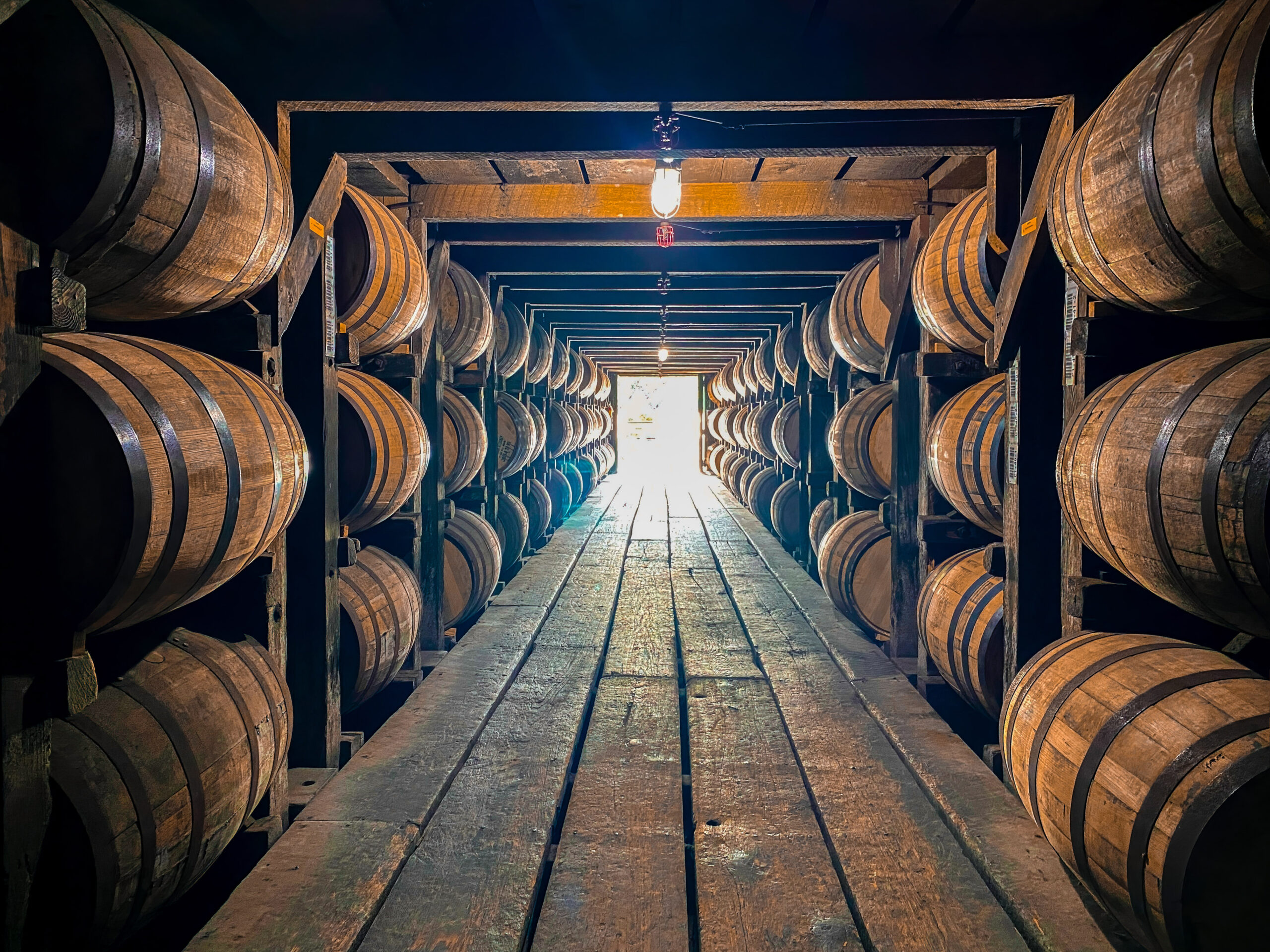
Inside the rickhouse, it’s church, but the rough kind—no stained glass, just busted boards and sunlight cutting through like warning flares. Dust and evaporated bourbon hang in the beams like incense while rows of barrels sit stacked like sleepy parishioners, sweating out years of Kentucky summers and winters. A guide drones about char levels and mash bills, but the real sermon is in the air: damp, woody, caramel, faintly medicinal, the smell of patience made visible in a country that gave up on patience a long time ago.
You pull whiskey straight from the barrel with a thief, sticky and violent at some ridiculous proof that would get a bartender arrested anywhere else, and it hits like confession and chemotherapy in the same swallow. No citrus wheel, no crystal coupe, no twenty-dollar garnish—just corn, oak, time, and somebody’s stubborn streak that refused to die when bourbon almost did. For a moment, standing there in the half-dark with your eyes watering and your chest on fire, you realize this might be the first honest drink you’ve had in months.
Dusty labels from the bad old days, new craft upstarts screaming for attention, vanity releases for people with more money than taste, and in between a few quiet killers poured heavy for regulars and the occasional lost pilgrim who looks like they might actually understand. This is where you hear the real intel: which rickhouse to ask for, which distillery tour is a postcard and which one will let you crawl around the guts, which “limited release” is actually worth lining up for in the rain. Out on the sidewalk, couples pose with neon, clutching merch bags; inside, the bartender slides you a taste of something not on the menu and shrugs like you didn’t both just commit a small sacrament.
The rickhouse is the gut punch you remember when you’re back home in some antiseptic bar where the whiskey never knew weather. You step in and the temperature drops, the light goes low, and the air thickens with oak, sugar, mold, and the angels’ share evaporating into the rafters like a slow, sticky prayer. Some places crank the theater—Bardstown Bourbon, Whiskey Thief, Lux Row—handing you a thief and letting you pull barrel-proof bourbon straight from the wood, tasting it in the same dusty, quiet air it’s been aging in for years.
If you’re smart, you don’t treat this like a pub crawl; you treat it like a road movie where the car never stops smelling like corn mash and fried chicken. Distilleries expect reservations now, and the good stuff—behind-the-scenes tours, premium tastings, bottle-your-own—can book out weeks in advance during spring and fall when the hills are green or burning red and the seasonal releases hit. Two, maybe three distilleries in a day is civilized; group them by geography—Lexington one day, Bardstown and Clermont the next—so you’re not sprinting from one parking lot to another while the real stories leak away behind you.
Make each stop count by mixing your cast: one big showpiece with a polished visitor center and choreographed tasting, one smaller or weirder operation where the guy pouring for you also fixes the pump when it goes bad. When you can, pay extra for anything that says “behind the scenes,” “blending,” “barrel thieving,” or “single barrel”—those are the moments when scripts fall away, cask-strength whiskey hits the glass, and you see how decisions about grain, barrel char, and warehouse placement turn into character. You’re not here to collect stamps; you’re here to watch people argue over flavor in real time, with your glass as exhibit A.
The premium tastings—the ones worth rearranging flights and credit limits for—share the same basic idea: slow down, shrink the group, and put better whiskey in the glass with a little bit of theater. Single-barrel and bottle-your-own sessions at outfits like Angel’s Envy and Bardstown Bourbon let you thief straight from casks, compare barrels, and walk out carrying a bottle that exists in exactly one barrel’s worth, tagged with your name and bad handwriting forever. Heaven Hill leans into museum energy—Bottled-in-Bond history, interactive exhibits, flights that actually teach you something—while National Bourbon Week and similar circus weeks layer on vintage connoisseur tastings, ham-and-whiskey pairings, and rare-bottle shopping windows you will absolutely regret missing later.
The scenery between all this drinking is almost painfully quaint. Rolling hills, horse farms, white fences, sagging barns, tiny churches and courthouse squares where the biggest drama is whether the lunch special runs out before one; the drives between rickhouses become the quiet, meditative B-roll you didn’t know you needed. Historic properties—Castle & Key, restored family distilleries, campus-like places with gardens and live music—turn into hangout zones where you can sit under a tree and remember that not every moment needs to be content.
On the Trail, the geek itch gets scratched in very specific ways. Distillery-only single barrels, private selections, and weird finished expressions appear on shelves you can’t raid from your couch, which turns every gift shop into a low-key casino for people who read tasting notes for fun. Connoisseur sessions line up flights by age, mash bill, proof, or finish, letting you taste your way into understanding instead of just chasing the biggest number on the label. “Connoisseur” on the Trail doesn’t mean white tablecloths and a guy correcting your glassware; it means smaller groups, older or stranger whiskey, and somebody who actually knows what they’re talking about sitting across from you instead of shouting over steam. Look for language like “warehouse access,” “lab visit,” “immersion,” “master distiller,” “Certified Bourbon Steward,” anything that suggests you’ll be in a working space, not just a visitor center diorama. Pair one deep-dive—single-barrel, bottle-your-own, hard-hat production walk, or mixology class—with one regular tour per day, then give the car keys to a sober adult and let the rest of the day happen.
Louisville’s Whiskey Row and riverfront hotels plug you straight into the Urban Bourbon Trail at night and day-trip access to big-name distilleries, while Lexington and Bardstown split the difference between horse country and “Bourbon Capital of the World” vibes with historic inns and taverns where the walls remember more than they say. Spring and fall are your seasons—Derby and peak foliage will test your sanity if you try to wing it—so you book early and accept that spontaneity is for weekday afternoons and backroad bars, not headline tours.
Three days on the Kentucky Bourbon Trail is enough for a tight, very drink-forward loop hitting the heavy hitters plus a bit of local color.
For a three‑day hit-and-run, staying in Louisville makes logistics and nightlife easiest; you’re within about 90 minutes of most marquee distilleries plus the Urban Bourbon Trail downtown. Lexington and Bardstown feel more pastoral and “horsey,” but Louisville gives you better bars, restaurants, and an official Bourbon Trail welcome center at the Frazier History Museum.
Base yourself downtown on or near Whiskey Row, then build a walkable loop of bourbon bars, supper-club dinners, and late‑night cigars for a very Rat Pack‑coded Louisville run.
For a throwback, slightly glamorous base with easy walks to distilleries and bars:
The Brown Hotel – Classic Georgian Revival, famous lobby bar and that gilt‑ceiling, big‑band energy; its Lobby Bar pours bourbon and leans into Old World opulence.
The Seelbach Hilton – Early‑1900s grand hotel with the restored Old Seelbach Bar downstairs, known for single‑barrel bourbons and a proper hotel‑bar vibe.
Hotel Distil (Autograph Collection) – Directly on Whiskey Row in a restored historic building, styled as “Louisville luxury” with a heavy bourbon theme and easy access to Main Street bars.
21c Museum Hotel – Boutique art‑museum hotel on West Main; pair of good rooms, walking distance to Evan Williams, Michter’s Fort Nelson, and Proof on Main downstairs for cocktails.
Anchor your nights on the Bourbon District / Whiskey Row and the Urban Bourbon Trail.
The Old Seelbach Bar – Early‑1900s room in the Seelbach with an upscale single‑barrel bourbon list; ideal for that “suit, tie, piano in the corner” drink.
Jockey Silks Bourbon Bar (Galt House) – Wingback chairs, jazz‑in‑the‑shadows marketing copy, and a deep bourbon list inside the Galt House.
Merle’s Whiskey Kitchen – Whiskey hall on Main with 200+ Kentucky bourbons, loud and lively, easy to fold into a Whiskey Row crawl.
Doc Crow’s Southern Smokehouse & Raw Bar – On historic Whiskey Row in an 1870s building; bourbon‑forward bar plus Southern food, so good as an early‑evening anchor.
The Bar at Fort Nelson (Michter’s) – Cocktail‑driven Michter’s bar on West Main with serious classic and modern whiskey drinks in a refined space.
Evan Williams Bourbon Experience / ON3 Bar – Do the tour by day, then hit the upstairs ON3 bar for flights and cocktails in a loft‑style room.
Think dark wood, white tablecloths, or old Louisville history.
Jeff Ruby’s Steakhouse – High‑gloss steakhouse on Main Street with Kentucky flourishes, live‑music feel some nights, and big‑night energy.
Jack Fry’s – Since 1933, originally a sportsman’s hangout; now a dim, photo‑lined room on Bardstown Road that feels like a time machine with bourbon and jazz.
Proof on Main – In 21c; contemporary food, strong bar, and a moody dining room that works for a dressed‑up dinner before a late whiskey session.
Brown Hotel Lobby Bar & Grill / J. Graham’s Café – Use J. Graham’s for the classic Hot Brown by day, Lobby Bar at night for cocktails under the coffered ceiling.
Louisville proper is tight on cigar lounges, so a bit of strategy helps.
Smokeasy The Private Lounge – Downtown cigar lounge with full bar, premium cigar selection, and a private‑club vibe; very on‑theme for late‑night bourbon and smoke.
The Louisville Cigar Company & Speakeasy – On Baxter Avenue; highly rated for “immaculate” selection and “life‑changing” drinks in a cozy speakeasy‑style space.
Louisville Thoroughbred Society – Private social club with bar and cigar program on East Main; worth looking into if you can get guest access for a true club feel.
Riverside Cigar Shop & Lounge (Jeffersonville, IN) – Just over the bridge from downtown; leather chairs, jazz on vinyl, artisanal bourbon and cigars, and very much that sit‑and‑linger lounge.
Start: Old Seelbach Bar or Brown Hotel Lobby Bar for martinis or first pours.
Dinner: Jeff Ruby’s steakhouse or Jack Fry’s for that mid‑century supper‑club tone.
After‑dinner whiskey: Walk Whiskey Row—drop into Merle’s, Doc Crow’s, and Michter’s Fort Nelson.
Cigars and nightcap: Smokeasy downtown or Louisville Cigar Company, depending on how far you want to roam.
Day 1 – Louisville & Urban Bourbon. Use day one to land, shake off travel, and walk between glass-and-brick whiskey temples on Main Street. Start at the Frazier History Museum, the official Kentucky Bourbon Trail welcome center, for context and maps. Tour 1–2 downtown distilleries: Evan Williams Bourbon Experience, Old Forester, Angel’s Envy, Rabbit Hole, and Michter’s all sit within a concentrated strip. Eat along Whiskey Row or the “Urban Bourbon Trail” bars, which pair big whiskey lists with solid Southern‑leaning food. Aim for no more than two full tours; after that, pivot to simple tastings or cocktails.
Day 2 – Day two is the bluegrass‑and‑rickhouse fantasy: rolling hills, limestone, and old money.• Drive toward Lexington/Frankfort for Woodford Reserve, Buffalo Trace, and Four Roses, three of the most historically loaded and photogenic distilleries in the state. Woodford is known for its manicured stone buildings and scenic valley setting; Buffalo Trace leans harder into deep history and free, high‑demand tours.[Cap the day with a late lunch/early dinner in Lexington or back in Louisville, depending on how hard you go on tastings.]Book every tour and tasting on this day well in advance; the big names sell out first.
Day 3 – Day three is for Bardstown, the self‑styled “Bourbon Capital of the World.”• Hit Bardstown‑area distilleries such as Heaven Hill, Lux Row, Maker’s Mark, Bardstown Bourbon Company, and Jim Beam’s Clermont operation if timing allows. Maker’s Mark is especially polished: red wax, art on the grounds, and tours where you can dip your own bottle when available. If you need a break from the barrel warehouses, Bardstown’s small downtown, the Kentucky Derby Museum back in Louisville, or Bernheim Arboretum are good low‑octane options. Keep it to two, maybe three distilleries with real tastings; beyond that, palates and notes all blur into one long caramel‑vanilla fog.
Reservations: Lock in tour times first, then build meals and drives around them; Buffalo Trace, Maker’s, and Woodford are particularly competitive.
Driving: Either designate a sober driver, use Uber or a local tour company, or cluster walkable spots (especially on Louisville day) to avoid drunk logistics.
Pacing: Mix big factory‑scale distilleries with one or two smaller/quirkier stops like Whiskey Thief or Rabbit Hole to keep the story interesting
In the end, Kentucky’s Bourbon Country feels like the part of America that might still be worth betting on: stubborn, a little broken, smelling of corn mash and oak smoke, still making something beautiful the hard way. It is a blue-collar cathedral built out of brick rickhouses, scorched barrels, and men and women too proud—or too dumb—to quit making whiskey when no one cared. The joy isn’t in the passport stamps or the limited editions; it’s in sitting on a rickhouse floor with your back against a barrel, drinking something you’ll never see again with people you’d dive into a foxhole with, and realizing you’re embarrassingly lucky to be there at all.