
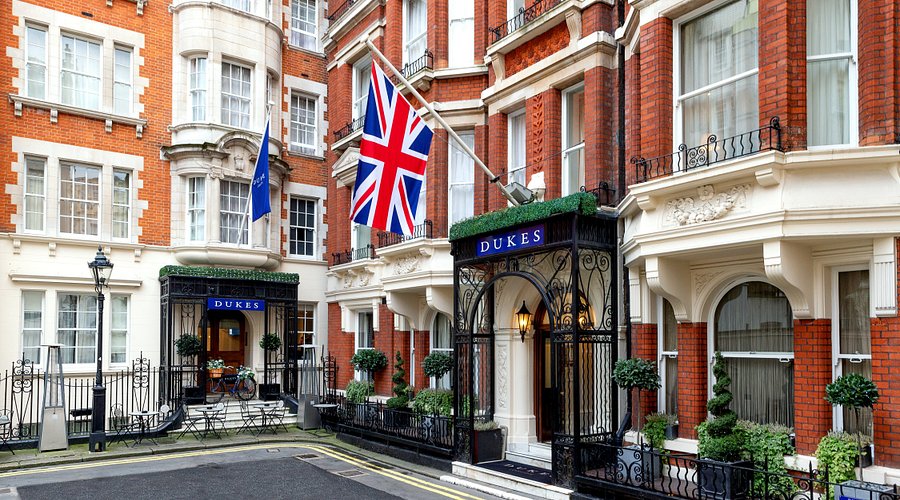
Dukes isn’t the kind of bar you find by accident. You don’t wander in, wide-eyed and lost. No, you slip through the door off a discreet St James’s Street, and just like that, you’re in another world—one that decided to freeze-frame somewhere around 1958. The ceilings press down, the chairs swallow you whole, and the hush in the air is the kind you only get when the drinks are serious and the tab makes your eyes water.
No flash, no neon, no TikTok gimmicks—just a trolley, a bottle of gin sweating like it’s nervous, and a bartender who’s seen enough to know you’re full of shit before you even open your mouth. He pours from the waist, like he’s unsheathing a blade, and fills a glass so cold it might as well be carved from ice. He tells you, with the quiet authority of a man who’s watched generations come and go, that two of these is plenty. You believe him, because you’re not stupid.
It’s theater, sure, but the kind that doesn’t need a stage. The suits are British, the perfume expensive, and the ghost of Bond mythology hangs thick in the air, like smoke from a decades-old cigar. The martini doesn’t hit all at once. First, it’s that icy citrus shock. Then, the warmth spreads through your chest. Then comes the realization: maybe that second one wasn’t such a brilliant idea. You stagger back out onto St James’s, blinking in the daylight, wondering if you just drank a cocktail—or if you briefly auditioned for a life that was never meant for you.
Ian Fleming used to drink here, living and working just around the corner. Now, the bar leans into it, selling martinis branded “James Bond–style,” even offering Vespa-inspired variations. Travel and film writers walk in with one thing in mind: to drink where Fleming drank. The first martini isn’t just a drink—it’s an initiation, a rite of passage into Bond fandom. You don’t just order a cocktail; you step into a story that’s been playing out for decades, one that never really ends.

Dukes isn’t a bar so much as a time capsule with better lighting. It’s one of those places where nothing is left to chance—where the ice, the posture of the bartender, even the angle of the lemon peel feels like performance art in slow motion. Nobody’s here to “go out.” They’ve come to disappear—quietly, tastefully, and with good gin.
The room hums at a low, expensive frequency. Conversations drift like the smell of citrus and juniper, all sotto voce, all coded. You imagine the deals being made here, the affairs beginning, the ones ending in painfully polite silence. The furniture creaks in protest under the weight of history and hangovers. There’s a faint scent of furniture polish, starched shirts, and old money trying not to show off.
Outside, London is noisy, young, impatient. Inside, it’s the opposite: deliberate, controlled, almost funereal. The martini ritual holds steady through it all. The barman—because you’d never call him a “mixologist”—glides the cart over, lifts the bottle that looks like it’s been marooned in an Arctic tomb, and pours. He doesn’t shake or stir. He just pours—a slow, deliberate act that feels more like a benediction than a drink order.
Halfway through the first one, your tongue goes a little numb, your shoulders loosen, and the room starts to glow in that benevolent way old rooms do after the right drink. The second martini doesn’t so much arrive as happen to you. Time gets fluid; the people around you blur into silhouettes and fragments of well-tailored conversation. There’s no music—just ice, glass, and the whisper of people pretending not to watch each other.
When you finally leave, St James’s feels too sharp, too modern, too awake. You catch yourself checking your reflection in a shop window, half expecting to see someone else looking back—someone wearing a tuxedo, maybe, carrying a secret, a mission, or at least a decent story.
Dukes doesn’t change you. But for an hour and a half, it lets you borrow a different self. The kind of self who knows things, who’s been places, who orders the martini before the world intrudes again. You walk into the cold London air, aware—pleasantly, painfully aware—that you’ll never taste that first drink again quite the same way.