
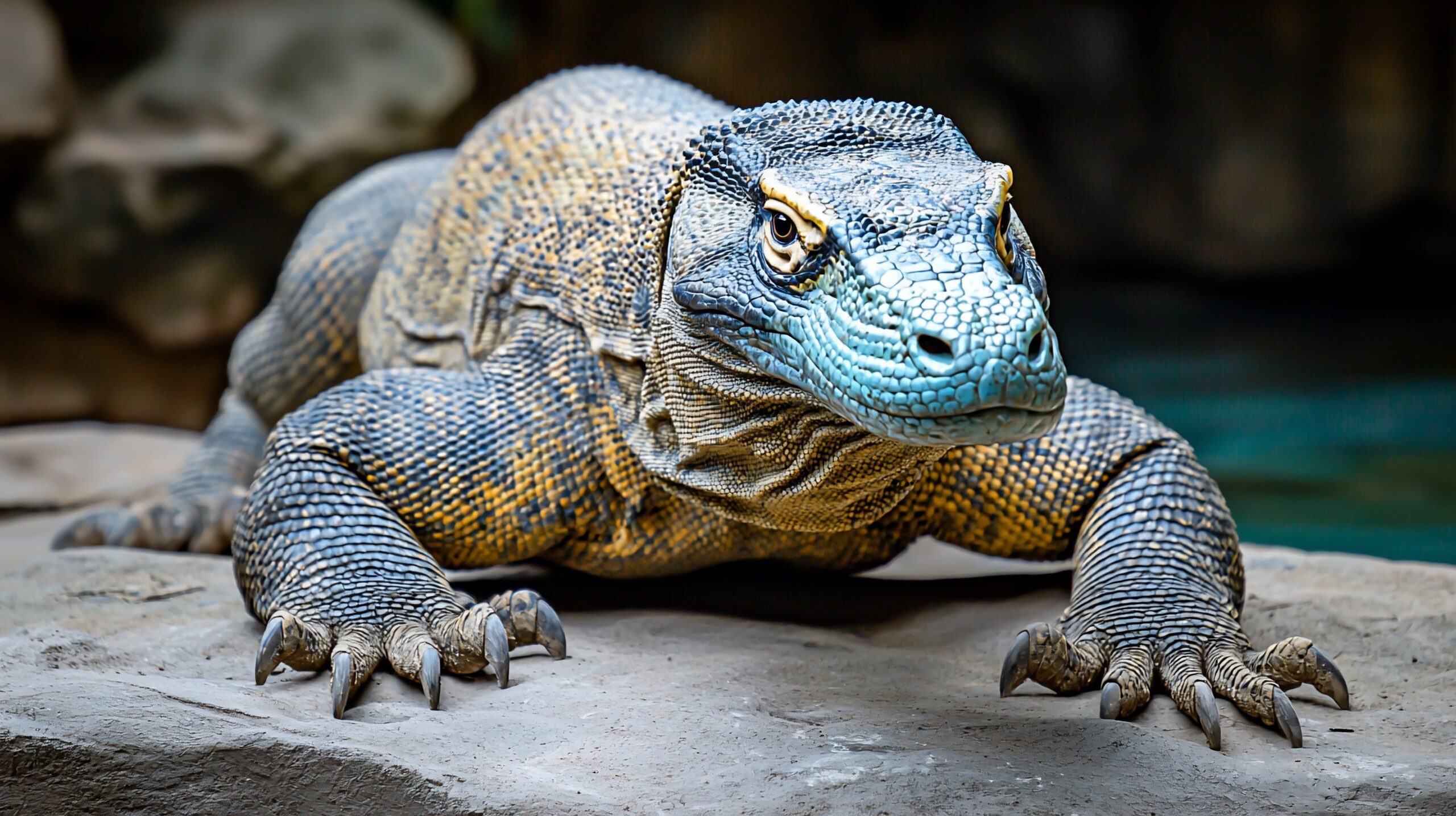
You go to Komodo Island because a rational brain isn’t enough anymore and you need to stand in front of something that could casually eat you and not even bother to remember your name. You go because the world has been sanded down into airports and algorithms, and out there in the Lesser Sunda Islands is a volcanic chunk of rock where three‑meter lizards still stalk the scrub like leftover mistakes from God’s first draft.
You go for the dragons, yes, these dead‑eyed Komodo brutes sunning themselves on the trail, tongues tasting the air and your blood pressure at the same time. You shuffle behind a park ranger with a forked stick, pretending this is “ecotourism” and not a controlled flirtation with being mauled by a prehistoric sociopath.
You go for the sea — that deranged, fluorescent soup of coral and current where manta rays cruise past like alien zeppelins and the reefs explode in impossible colors under your mask. You drop into the water and realize that everything down there is sharper, faster, and better designed to kill than you are, and somehow this feels like relief.
You go for Pink Beach, that stretch of sand that looks like the planet had a nosebleed in pastel — crushed coral bleeding into white grains until the whole shore turns a soft, hallucinatory blush. You stand there between rose-colored sand and electric‑blue water and wonder what kind of lunatic planet you’ve been living on that you thought beige office walls were normal.

And at dusk, you drift toward a mangrove speck called Kalong, where thousands of bats explode out of the trees and pour across the sky like a living oil spill, a black river against the burning horizon. In that moment, with dragons on land, monsters in the sea, and the sky itself unraveling into wings, you finally admit the truth: you didn’t come here for “holiday memories.” You came here to remember the world is still wild enough to scare you sober.
How will a day with these big boys change your life?
Once you’ve stood on a baking strip of volcanic dirt with a three‑meter reptile staring at you like you’re a lukewarm snack, the rest of your life will never feel quite as safe, or as small, again. The office, the inbox, the endless digital howl — all of it shrinks after you’ve watched a Komodo dragon lumber out of the scrub and realized there is still something on this planet that does not care who you are, what you’ve achieved, or how many followers you have.
A visit like that rewires your risk meter: you learn the difference between manufactured adrenaline and the clean, bright terror of real wildness, the kind that makes your heart slam and your senses sharpen instead of just giving you a selfie. You come home with a permanent ghost of those pink beaches and manta‑haunted currents flickering behind your eyelids, and every time life starts to flatten out, part of you remembers that you once sailed through dragon country and survived — and suddenly you’re a little less willing to live like furniture.
You reach Komodo Island by first getting to Labuan Bajo (Flores) and then taking a boat into Komodo National Park; there are no direct flights or roads to Komodo itself.
Step 1: Fly to Labuan Bajo
The standard move is to fly into Labuan Bajo’s Komodo Airport (LBJ), the gateway town for all Komodo trips.
From Indonesia’s main hubs (Bali/Denpasar, Jakarta, Lombok), there are direct flights of about 1–2.5 hours with airlines like Garuda Indonesia, Batik Air, Citilink, Lion Air, and AirAsia.
From March 2025 there are also scheduled direct flights to Labuan Bajo from Singapore as well as Bali, Jakarta, and Lombok, giving more international connection options.
Step 2: Transfer to Labuan Bajo harbor
Komodo Airport sits just outside Labuan Bajo; the harbor is about a 10–15 minute taxi or hotel-shuttle ride away.
Most tour operators and liveaboards meet guests at arrivals with a sign and include the transfer to the pier in the package.
Step 3: Boat to Komodo Island / National Park
From Labuan Bajo, you join either a day-trip speedboat, a slow wooden boat, or a multi-day liveaboard that visits Komodo, Rinca, Padar, and the surrounding dive/snorkel sites.
Typical day tours to Komodo National Park run as shared group trips or private charters; multi-day phinisi cruises are the higher-comfort, more immersive option.
1. Never be alone, ever
2. Weaponize distance
3. Move like you’re defusing something
4. Don’t smell or act like food
5. If it charges, buy time and terrain