
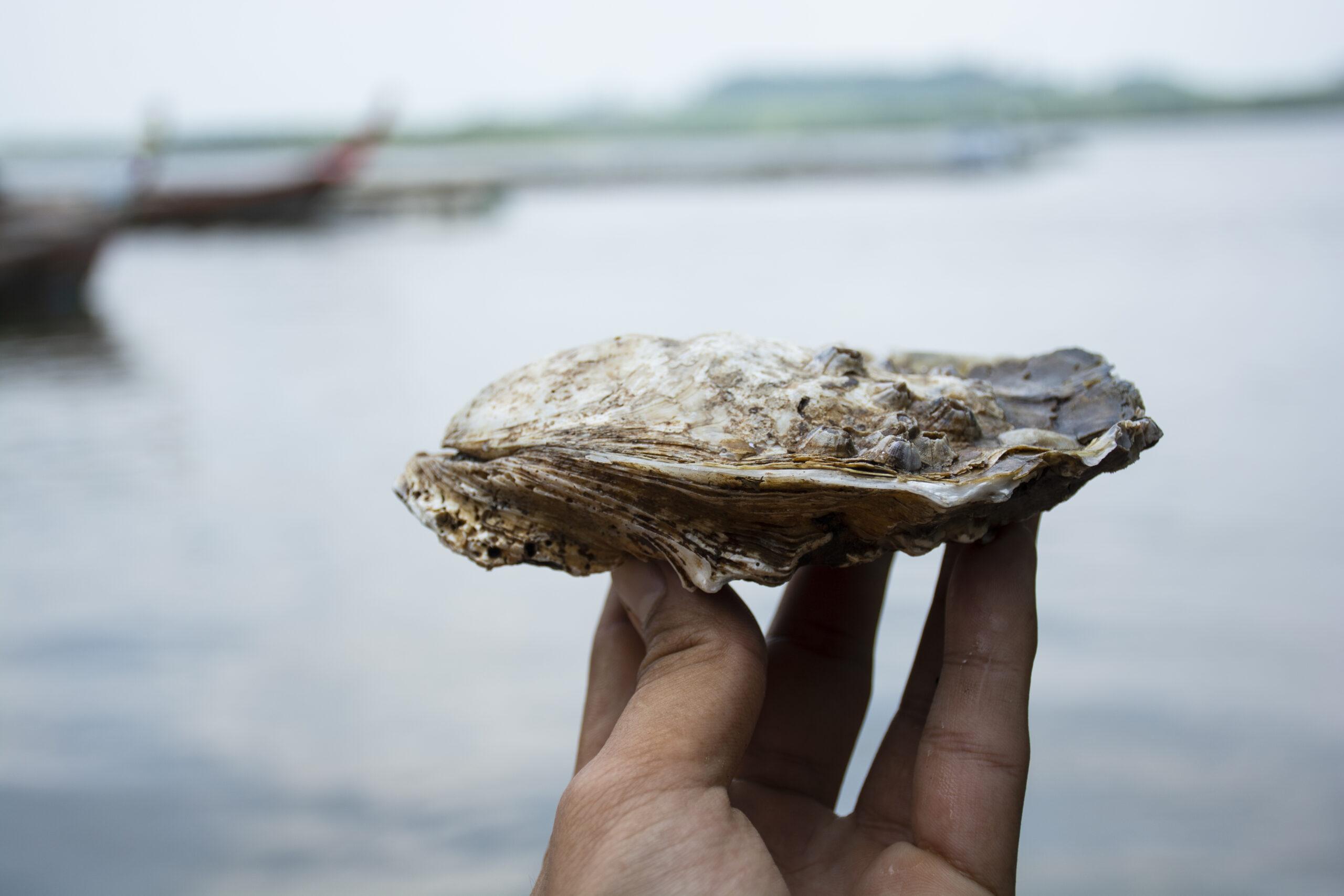
The universe is full of mysteries – quarks, black holes, Dancing with the Stars – so speaking in absolutes can be really tricky. But the one thing I am certain of in this life is that the best oysters come from Massachusetts and the best oysters in Massachusetts come from Wellfleet or Duxbury’s Island Creek. Good, now that we’ve established Hayes’ 5th Law, we can move on to talking about the proper handling of god’s secret midnight stash, the holy bivalve we call the oyster.
Every diner who actually cares about oysters has lived that little tragedy: a perfect menu, a confident order, and then a ring of desiccated meat glued to empty cups staring back at you. It is almost always the same crime scene—over-eager line cook, vertical shucking, hinge grenaded open, liquor dumped, and the bodies left high and dry on a bed of ice. So now you get these tragic, suffocated oysters — bone‑dry, gasping in the half shell. There oughta be a telethon or some kind of awareness campaign launched to avert this catastrophe in the future.
Bottom line, if you’re dumping the liquor out of an oyster, you shouldn’t be allowed within ten feet of a raw bar. That cold little tide pool in the shell? That’s the whole point. That’s the postcard from whatever magical inlet this thing died for you in. You toss that, you’re not ‘cleaning it up,’ you’re bleaching the soul out of it. An oyster is a direct line to the sea. It shows up with its own brine, its own sauce, its own story already written in salt. Your job, as the person with the knife, is not to rewrite it. Just crack open the door, don’t wreck the room. Anything more is vandalism masquerading as ‘technique.’
Oysters are special because they combine wild complexity of flavor with serious nutritional value and major ecological benefits. And, they’re freaking delicious. Oysters reflect their waters the way wine reflects terroir, so salinity, temperature, tides, and plankton all imprint distinct flavors and textures. They can range from sharp brine bombs to sweet, creamy, or melon‑y, which is why specific places like Wellfleet or Chiloé develop cult followings.

Oysters are dense in zinc, iron, vitamin B12, protein, and omega‑3s, making them one of the more nutrient‑packed seafoods per bite. Their long‑running reputation as an aphrodisiac comes from Greek myths about Aphrodite and cultural icons like Casanova, plus that zinc connection is jet fuel for your mojo.
So how do you avoid disaster at the raw bar?
Say this to your server or the shucker when you order, before they start opening anything:
“Can you shuck these to order and keep all the liquor in the shell?”
Why this phrasing works
If you’re intrepid enough to go shuck yourself, here’s a primer.
Scrub the outside of the oyster under cold running water to remove mud and sand; then dry the top so grit does not wash inside when you open it.
Hold the oyster cup-side down on a stable surface, work in at the hinge with a controlled twist instead of prying, and keep the shell level as you cut the muscles so the liquor stays in the bottom shell.
Setup and orientation:
Place the oyster cupped side down (deeper half on the bottom) and hinge toward you so the liquor naturally pools in the cup.
Use a proper oyster knife plus a glove or folded towel to protect your non-dominant hand and stabilize the shell. Work over a tray or towel to catch any liquor that does escape, and avoid strong overhead prying that can crack shell and spill brine.
With the oyster level, insert the knife tip into the hinge and gently wiggle until it seats; then twist like turning a doorknob to “pop” the shells. Use a firm but small motion so the top shell lifts just enough to break the seal without jolting the oyster or sloshing out liquor.
Once you feel the pop, slide the blade along the inside of the top shell to cut the adductor muscle, keeping the oyster parallel to the table so the liquor stays level.
Remove the top shell carefully, then run the knife under the oyster to free the bottom adductor, using gentle strokes so you don’t puncture or “pop the belly.
After cutting free, flip the oyster meat so the plump side faces up, but avoid lifting it so high that liquor pours out of the cup.
Check for shell fragments and scoop them with the knife tip rather than rinsing; then nestle the shell onto crushed ice to keep it level and hold every drop of sacred liquor until it hits the lips.
A shucker is born every minute. Feel free to share this drill with one you know.