
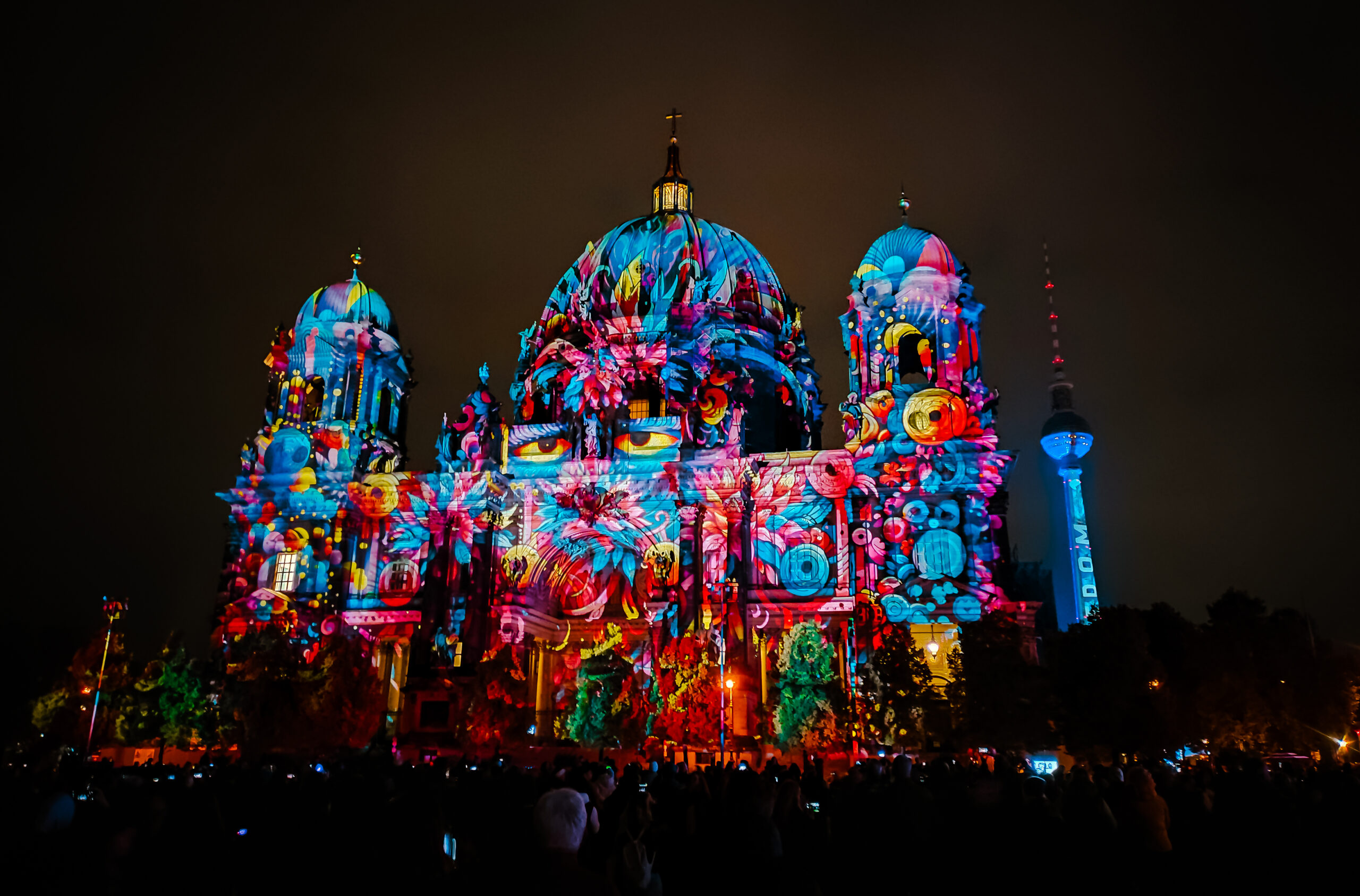
Iggy Pop and David Bowie pulled out of the Los Angeles spiral in the mid‑’70s and holed up in West Berlin, looking for cheaper rent, fewer dealers, and a clean slate to work from. In that gray light, they built the albums The Idiot and Lust for Life, the latter carrying “The Passenger,” whose night‑soaked cityscapes are often tied to Berlin’s streets, trains, and bars.
Iggy and David were just two more of a long list of beautiful screwups and malcontents who turned Berlin into ground zero for whatever they were trying to burn down and build back up. In the 1920s–30s, Weimar Berlin became modernism’s test lab—home to Expressionism, Dada, Bauhaus, and New Objectivity, reshaping how cities, conflict, and the body were portrayed. Its cabarets mixed politics, satire, jazz, and open sexuality. Berlin’s film scene—Murnau, Lang, Lubitsch—defined noir, horror, and the urban dystopia, while writers like Döblin and Isherwood turned the city into a stage for fractured, transgressive modern life.
After 1989, abandoned factories birthed techno, with clubs like Tresor and Berghain transforming ruins into a global youth culture. Berlin’s laissez‑faire nightlife—no curfews, door selection by vibe—reshaped clubbing from Europe to the Americas.
From the first moment I arrived, I loved Berlin—warts and all. The scars on the walls, the punk squats turned cocktail bars, the ghosts whispering through every U-Bahn tunnel. But lately, I’m starting to wonder if it’s Berlin I love, or the mythology of it. The scrappy artist mecca, the cheap rent, the sense that anything could happen. Maybe what I love is gone—or perhaps it’s been appropriated into a brand. Because the thing about Berlin is, it was never supposed to get polished. It was supposed to be dirty, raw, alive in a way that made you feel slightly uncomfortable. The city of ghosts, of squatters and drag queens and techno prophets preaching the gospel of four-on-the-floor salvation to a roomful of beautiful, broken strangers.

Walk around now and you still catch flashes of the old magic: a kid stumbling out of a club into hard daylight, a cigarette-scorched kneipe pouring crappy beer and better conversation, a Turkish döner joint on the corner feeding the hungover and the hopeless. But in between the kebab grease and the graffiti are start-up campuses, concept stores selling pre-distressed authenticity, and apartments nobody working in a kitchen, bar, or gallery will ever be able to afford. The same people who came here because “there are no rules” are now fighting condo boards and noise complaints.
The irony is that Berlin was always an invention project, a place people came to remake themselves from whatever past they were trying to outrun. But, often success kills. Maybe what hurts is realizing that the myth did its job a little too well: it drew the dreamers, the freaks, the artists, and then, inevitably, the people who show up after the party, sweeping up the bottles and asking how much the venue might go for if you turned it into lofts.
Now it’s Instagrammable. Now it’s safe. The kebab joints still sizzle, the clubs still promise transcendence at 4 a.m., but somewhere in between the start-up lofts and the curated grit, that reckless soul—that Berlin—got tamed.
So yeah, maybe what I love now is the idea of Berlin, the way it looked in grainy photos, or the way it felt when I first visited just after the wall fell. The Berlin in my head still smells like cold cigarette smoke in a tiled bar, wet concrete, bad coffee, and something frying in old oil; it still feels like a place where you can disappear if you want to. The real Berlin—today’s Berlin—feels more complicated, more polished, more self-conscious. But underneath the branding and the bullshit, if you stay up late enough, walk far enough, and stop believing the brochure for a minute, you can still feel it breathing.
A reasonable question now is, where’s the Next Berlin?
Any place loudly marketed as “the new Berlin” is already on the conveyor belt: hype, speculation, brunch joints, upmarket boutiques, death. What we’re really looking for is not a clone of Berlin, but familiar conditions: cheap space, lax rules, a critical mass of weirdos, and a government too distracted or broke to fully “curate” the rough edges yet. Old industrial or post-socialist infrastructure being reused by artists rather than developers. A nightlife or underground scene that’s messy, inconsistent, and not yet optimized for tourists.
Here are some thoughts.
Beyond the usual map
Other candidates:
But, why not Detroit?
Detroit already is a “Berlin-type” city in some ways—post‑industrial, music‑driven, relatively cheap and scarred—but it is unlikely to become a straight “new Berlin” so much as its own hard-edged art and nightlife capital.
Detroit has the raw ingredients to be a genuine mecca for art, music, and misfits—but whether it becomes a “new world culture” capital depends less on cool festivals and more on how it handles inequality, housing, and who gets to stay when the hype arrives. Detroit is already a pilgrimage site for certain tribes—techno heads, art‑school kids, urbanists—who see in it the outline of a new kind of global city, rougher and more honest than the polished capitals.
Here’s the thing, a real renegade mecca would require protecting cheap space: zoning and housing rules that keep warehouses, shopfronts, and apartments accessible to working‑class Detroiters and not just the “creative class.”
Whether Detroit becomes a true world mecca for art and renegades, rather than just another “revitalized” backdrop, will hinge on how hard the city is willing to fight for the right people to remain in the frame when the cameras show up. I believe it is worth a go.
Lorem ipsum dolor sit amet, consectetur adipiscing elit. Ut elit tellus, luctus nec ullamcorper mattis, pulvinar dapibus leo.