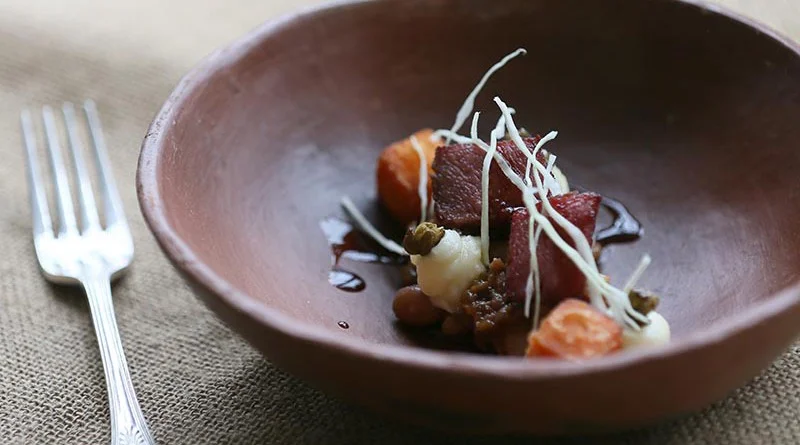
When I was a kid, my old man decided we should raise chickens in the backyard. Why a guy from Boston suddenly fancied himself a farmer is anyone’s guess. But there came a day when we had to face the music, and out came the hatchet.
The headless birds did their danse macabre around the yard—bloody, frantic, alive for a few surreal seconds. Hard to watch. My sister Joan never got over it. I learned a lesson: if you’re going to kill something, don’t waste it. That was the start of my head-to-tail way of thinking.
Offal, “off cuts,” butcher’s choice – that’s the stuff polite people pretend not to see when the animal hits the table.
Tongues, cheeks, hearts, livers, kidneys, tails, ears, stomachs, all the knobby bits and cartilage and gristle that don’t photograph well.
The cuts your grandmother knew how to cook, your great‑grandmother survived on, and your butcher quietly keeps for the regulars who still know what to do with them.
You don’t eat offal to feel virtuous. You eat it because, prepared well, it’s freaking delicious.
Somewhere along the way, we in the sanitized, zipped up, homogenized West, got lost.
We decided steak should all look like a centerfold: big‑eyed filet, boneless, trimmed, wrapped in plastic, no history, no context, no work.
The loin and rib got dressed up as “premium,” and everything else – the flavorful, sinewy, braising cuts, the organs that did actual labor – got demoted to “scraps” and sold to people who didn’t have the money to be picky.
The irony: the “trash” is where the soul lives. The expensive cuts are the edible equivalent of an airbrushed headshot.
Eating offal is a small act of defiance in a world that wants your food bland, tidy, and deniable. Because many cultures ritualize offal—grilled hearts, stewed tripe, blood sausages—eating it plugs you straight into older, communal, almost sacramental eating traditions. Leaning into intense tastes and textures, rather than chasing prepackaged bland safety, deepens bodily awareness and pleasure and lights up your caveman brain cells.
Nose-to-tail is the practice and philosophy of using every edible part of an animal—muscle, organs, bones, fat, skin, odd bits—rather than just prime cuts. If you’ve ever eaten a hotdog, you’ve had them all – and more.
The easiest way into nose-to-tail is to start with “gateway” organs and collagen-heavy cuts that behave like familiar braises rather than jumping straight to lungs and spleen.
Easiest offal to start with
- Liver (chicken, then lamb/beef): Quick to cook, easy to pan-sear or turn into pâté, and widely recommended as a first organ because it’s forgiving and extremely nutrient dense.
- Heart (beef or lamb): Eats like a dense steak; can be grilled, skewered, or sliced into stir-fries and is often suggested as a beginner-friendly cut since the flavor is mild and meaty.
- Tongue (beef): When simmered and peeled, it turns into very tender, fatty meat perfect for tacos or sandwiches, making it a classic introductory “weird bit” that still feels luxurious.
Collagen and “odd” muscle cuts
- Oxtail: Slow-cooks into gelatinous, rich meat that behaves like short rib in stews, frequently cited as an ideal starter nose‑to‑tail cut for home cooks and slow cookers.
- Beef cheek and shin/shank: These braise down to silky, spoonable meat and are explicitly recommended as nose‑to‑tail starter cuts because they are meaty but teach collagen management.
- Lamb or pork belly and neck: Often highlighted as underrated but approachable; they can be rolled and slow-roasted or braised and feel more like fatty roasts than “offal.”
Bones, fat, and “extras”
- Marrow bones: Roasted marrow bones are simple to prepare and iconic to the nose‑to‑tail canon, often paired with toast and bright garnishes.
- Bones for stock (knuckles, feet): Cheap and easy to use for broth, turning otherwise discarded parts into gelatin-rich stock that fits the nose‑to‑tail mindset without challenging textures on the plate.
For easing people deeper into offal after heart/tongue/sweetbreads, the next cuts to reach for are the ones that still eat “meaty” if treated right.
Next-step offal cuts
- Kidneys (lamb, then beef): Strong smell if mishandled, but lamb kidneys in particular are a classic next step; soaking in cold salted water or milk, trimming the white core, and fast searing keep them tender and tame.
- Tripe (honeycomb beef stomach): Flavor is mild but texture is the hurdle; long blanching and braising in aromatic stock (or frying after braise) turns it into something most people read as about sauce and chew, not funk.
- Gizzards (chicken/duck): Tough but not real organy; pressure‑cooked or long‑braised gizzards, then fried or grilled.
- Blood (as in blood sausage/boudin morcilla): In sausage form it’s more about spice, fat, and grain than metallic tang, and many beginner guides flag it as a logical follow‑on for people already comfortable with charcuterie.
If you want safe industrial food, let me recommend a Vegas buffet or the Denny’s on the corner. If you want to cowboy up and try the world’s best kept secrets, come on down. Give offal a fair shot and it might blindside you with how good it is—and leave you a little pissed at yourself for dodging it all these years.