
Thomas Wolfe famously wrote ‘you can’t go home again.’ Actually, you can, if home is wherever you want it to be.
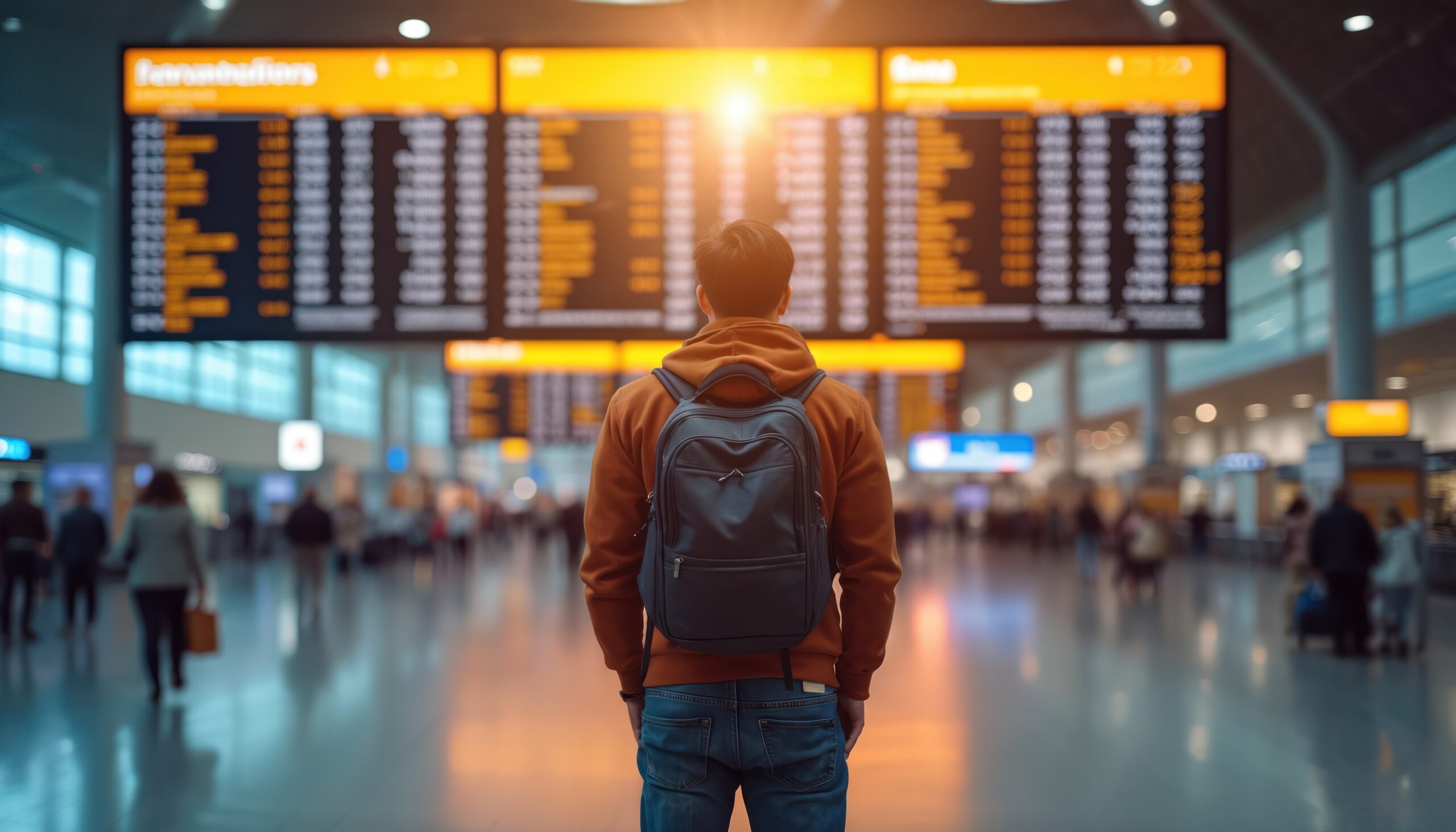
There’s a hum you hear these days in every airport lounge, every cafe with half-decent Wi‑Fi from Bali to Belgrade—the quiet churn of people who’ve traded coordinates for connection. They aren’t backpackers or exiles, not exactly. They’re “location independent workers,” the laptop class, living proof that work, borders, and even the notion of home are all up for renegotiation. It’s not a movement so much as a prototype—a rough draft of how human life might reorganize when geography stops mattering but inequality still does. Today, remote workers account for 50 million people globally, up from 35 million two years ago. Nomad Nation has more citizens than Canada or Spain.
Walk into a cowork café on the far side of the world and you’ll see it: graphic designers from London, coders from Lagos, brand consultants Zooming from their hammocks in Tulum. They talk about freedom, “life design,” and the glamour of working from paradise. But peel back the filter and you’ll find something older—mercantile at its core. Work has gone decentral. Companies now fish a global talent pool like trawlers, picking out contractors with the right skills and Wi‑Fi speed, while office towers sit like abandoned temples to a bygone economy. The big winners? Places that turned their reputations into brands.
Take Lisbon, Medellín, or Chiang Mai. Once marginal, now holy sites in the pilgrimage of remote work. Local economies pivoted overnight—co‑working lofts sprouted where warehouses stood, and coliving compounds replaced corner bars. A new ecosystem emerged, fueled equally by aspiration and espresso. Cities and islands learned to market themselves like apps: clean design, good UX, low friction, lifestyle optionality. Governments followed, competing in a quiet arms race for global citizens with passports full of stamps and bank accounts full of foreign currency. Portugal offers Europe on a starter visa. Croatia promises lower taxes and Adriatic sunsets. Even microstates in the Caribbean want a piece of the future.

Visa conditions now read like product specs: income thresholds, tax perks, streamlined online applications. Some nations waive income tax on foreign earnings; others fast‑track residency if you can prove broadband and a steady paycheck. The pitch is always the same—Don’t just visit. Belong here for a while. They want your spending, not your permanence.
It sounds utopian, but like anything that travels too easily, it leaves behind bruises. Locals see rents spike, cafes price out their regulars, and whole neighborhoods mutate into curated “remote work hubs.” Two economies form: one serving the mobile elite, one struggling to keep up. Done right, nomad inflows fund better internet, education, even entrepreneurship. Done poorly, they just buy isolation at a premium.
And then there’s the planet groaning beneath the weight of all this movement. A hundred thousand one‑way tickets, constant motion, carbon footprints the size of small villages. The good ones—the ones thinking about tomorrow—start to slow down. They stay longer, burn less fuel, talk more to people outside the Slack channel. Maybe that’s the next evolution: stay put long enough for a place to matter again.
The irony of all this is that digital nomadism might be our species’ test run for what’s next. As climate, tech, and economics offer fewer reasons to stay still, mobility becomes the baseline condition of modern life. We’re learning—awkwardly, inconsistently—how to live everywhere and nowhere at once.
Untethered work nudges humanity toward a future where movement is the default condition, settlement the exception, and “home” more software than soil. It does not just change commutes or office layouts; it quietly rewires migration, identity, class, and the species’ relationship to the planet.
Remote work and digital nomadism normalize the idea that earning a living is no longer tied to a particular town, factory, or skyline, but to a connection and a device. Over time, this makes mobility feel less like an exception and more like a standard operating condition for the professional classes.
As more people work from “anywhere,” the classic pattern—grow up somewhere, move once or twice, then settle—starts to look old-fashioned. Remote‑enabled workers experiment with looping trajectories: periods abroad, returns to hometowns, and serial relocations that redefine what a life course looks like
No one talks much about belonging amid all this freedom. But look closely at the long‑timers—the ones hunched over in some corner café, nursing their third coffee and a flickering connection. Somewhere between the tabs and time zones, they’re still looking for a kind of home. Maybe not a permanent one. Just a place where the Wi‑Fi holds, the beer’s cold, and someone still remembers their name after the visa runs out.
There’s no place like home. Not anymore.